


EU Digital Product Passport for Textiles: What Garment Exporters Must Prepare For
Noor Ahmed Raaz
Specialized in Apparel Manufacturing
Owner and Editor in Chief Textile Merchandising
Asst. Prof., Department of Textile Engineering
Atish Dipankar University of Science & Technology
Email: textilemerchandising1@gmail.com
Picture a customer in a Berlin shop picking up a T-shirt your factory made in Gazipur. She scans a small code on the care label and instantly sees what the shirt is made of, how much recycled fibre it contains, where the fabric came from, and how to recycle it. This is not a startup demo. It is a legal requirement the EU is building right now, and it will reach every garment exported to Europe.
It is called the Digital Product Passport, or DPP. If your factory ships to EU buyers, it will land on your desk as new data requests from buyers. You still have time to prepare. This article explains what the DPP is, when it really starts for garments, what data it carries, and what your team should do today.
What Is a Digital Product Passport?
Think of your travel passport: a standard-format ID that officials at any border can read. A Digital Product Passport does the same for a product a structured digital record of what it is made of, where it came from, and what should happen to it at end of life.
For clothing, the passport sits behind a code printed or woven into the garment most likely a QR code on the care label or hang tag. Scan it and you reach the record, which follows an EU-set data structure: the same format for a T-shirt from Bangladesh and a jacket from Portugal, readable by consumers, recyclers, repair shops, and authorities across Europe.
One point to clear up: the passport is not printed on the garment. The garment carries only the key the code and a unique identifier. The data lives in digital systems held by the company placing the product on the EU market, indexed by an EU registry.
Why Is the EU Doing This?
Europe has a textile waste problem and an information problem, and they are connected. Used clothing ends up in landfill because nobody knows exactly what it is made of a recycler cannot safely process a jacket if the fibre blend is unknown.
At the same time, shoppers are surrounded by green claims “eco”, “conscious”, “sustainable” with little proof. The EU wants claims backed by data: if a brand says a shirt contains 50 percent recycled cotton, the passport should show it, traced to certificates and supplier records.
So the DPP aims to give consumers honest information, help repairers and recyclers work, and push brands toward longer-lasting products. For exporters, the data behind every style will matter almost as much as sewing quality.
How a DPP Actually Works
Four parts. The data carrier typically a QR code on the GS1 Digital Link standard or a Data Matrix code printed on the care label, woven into a label, or placed on the hang tag. The unique product identifier, like a passport number, that the code points to. The digital record: the structured data behind the identifier, for which the brand or importer placing the product on the EU market is legally responsible. And the EU registry, run by the European Commission so authorities can verify passports across 27 countries.
Consumers see materials and repair options, recyclers see technical details, authorities see the full record. Your factory sits upstream: your buyer can only publish data that you supply, in usable form.
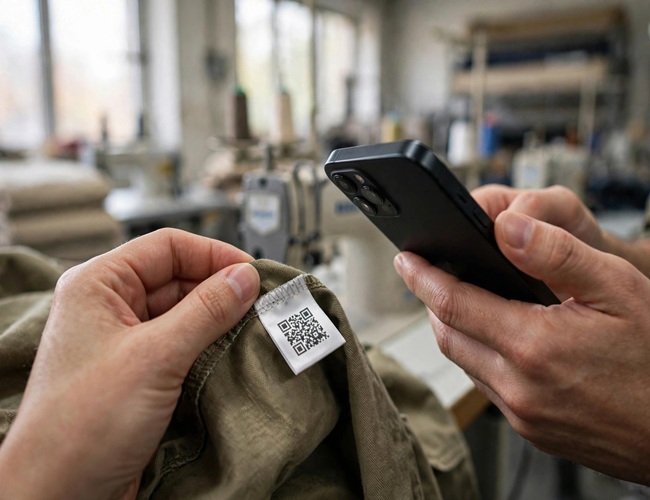
The care label is the most likely home of the Digital Product Passport: one scan connects the physical garment to its digital record.
What Data Will a Textile DPP Carry?
The exact fields will be fixed in the textile delegated act, based on preparatory work by the EU’s Joint Research Centre. Note the right-hand column: most of this data originates in factories and mills, not the brand’s head office.
|
Data item |
What it means |
Who provides it |
|
Fibre |
The |
Fabric |
|
Recycled |
Percentage of recycled material |
Fibre/yarn |
|
Substances |
Chemicals |
Dyeing |
|
Durability |
Expected lifetime, supported by |
Factory |
|
Repairability |
Spare |
Brand, |
|
Recyclability |
Whether the garment can be |
Brand, |
|
Supply |
Where |
Every |
|
Carbon |
The product’s environmental |
Brand |
Our industry already produces all of this in scattered form the DPP simply demands it be complete, consistent, and retrievable per style. If your records live in five Excel files and a drawer of printouts, you understand the challenge.
The Timeline: What Is Fixed and What Is Not
This is where most confusion sits. The DPP is created by the Ecodesign for Sustainable Products Regulation (ESPR), in force since 18 July 2024. It is a framework law: it does not set garment rules directly. Those come product group by product group, through separate legal acts called delegated acts.
Textiles and apparel are a named priority group, but the textile delegated act is expected in 2027 (planned Q3–Q4). After adoption, the ESPR normally allows at least an 18-month transition, so mandatory textile DPP compliance realistically lands around late 2028 to 2029, large companies first. Until the delegated act is published, these dates are not final.
|
Milestone |
Date |
Status |
|
ESPR (the framework regulation) |
18 July 2024 |
Done |
|
Battery passport mandatory |
18 February 2027 |
Fixed |
|
Textile delegated act expected |
2027, planned Q3–Q4 |
Planned |
|
Textile DPP compliance, after |
Around late 2028–2029, large |
Expected, not final |
Here is the mistake to avoid: many websites claim the passport “becomes mandatory for textiles in 2027.” Wrong 2027 is when the textile rules are expected (and the battery passport goes live for another industry). It is when garment requirements become clear, not when shipments get rejected. Plan on the real dates.
The ESPR also bans destruction of unsold apparel and requires disclosure of unsold stock handling, starting with large companies. Brands will order more carefully in response.
What It Means for Bangladesh Garment Exporters
The ESPR puts legal responsibility on the economic operator placing the product on the EU market — the European brand or importer. But your buyer cannot build a passport without your data, and buyers under pressure pass the work down the chain. The law names the brand; the brand’s supplier manual names you.
Buyer data requests will get deeper. Composition and test reports before shipment are standard today; tomorrow’s request adds fibre-level traceability where the cotton was grown, which mill spun the yarn, which unit finished the fabric. Sell recycled polyester and expect GRS transaction certificates tracing it to your garment.
Record-keeping will become a selling point. Factories that can pull up composition, shrinkage and colour fastness for any style shipped in three years will win orders; factories that can’t will lose them.
Chemical data will be under the microscope. The substances-of-concern field means dyeing units must know exactly what goes into the fabric. If your dyehouse works with ZDHC standards and follows an MRSL, keep the evidence ready and ask for compliance statements per colour as standing documents.
France gives a preview: its AGEC law already requires traceability and environmental information on textiles sold in France, and several buyers already ask for this data. The EU-wide DPP is the same idea with stricter, standardised rules.
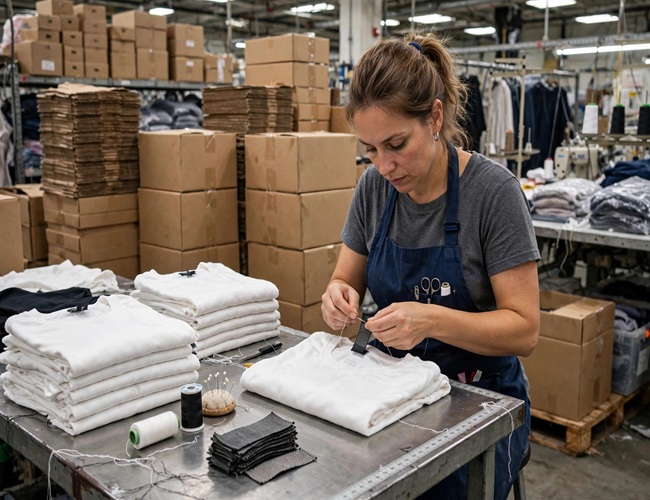
Labels carry more than a brand name today. Tomorrow they will carry the key to the garment’s digital passport.
How to Prepare Now
You need organisation, not new machinery. Start this year.
- Map your supply chain beyond Tier 1. Trace your top five styles backwards: dyeing, knitting/weaving, spinning, fibre source. A simple spreadsheet is fine — you will find gaps, and finding them now is the point.
- Digitise your style data. Move composition, test reports, certificates, supplier names and production dates into one system per style — even a well-named shared folder beats a drawer of printouts. When a buyer sends a data template, fill it from one place.
- Keep records per batch. File composition, shrinkage and colour fastness results against batch numbers, since fibre mixes and dye lots vary. Six months of disciplined filing puts you ahead.
- Keep certifications current. For recycled or organic products, keep GRS, GOTS or OEKO-TEX certificates yours and your suppliers’ valid, and let transaction certificates flow with the goods.
- Run a QR label pilot. Trial QR-coded labels on a single style with a willing buyer. You will learn quickly whether the code survives forty washes and which label supplier can print variable codes per style.
- Train the merchandising team. Everyone answering buyer queries needs to know what traceability data is and where it lives. A half-day workshop is enough to start.
Four Myths Worth Dropping
Myth 1: “The DPP starts in 2027 for garments.” 2027 is when the textile rules are expected — and when the battery passport goes live. Garment compliance follows in late 2028–2029. Start now, but don’t panic about 2027.
Myth 2: “Only EU companies are affected.” The legal duty sits with the EU importer, but factories feel it through buyer requirements. Your buyer’s compliance team will send a spreadsheet to fill in — that spreadsheet is the DPP reaching you.
Myth 3: “A QR code is enough.” A code linking to an empty or invented record is a compliance failure, not a shortcut. The data behind the code is the passport; the code is just the door.
Myth 4: “Small orders are exempt.” The final scope is unwritten, but EU law applies to products placed on the market, not to large orders. Don’t bet your business on a possible exemption.
Frequently Asked Questions
Does my factory need to buy DPP software? Not necessarily. The record is created and hosted by your buyer, the EU economic operator. Your job is supplying accurate, organised data via their templates and PLM systems.
Which products will need a passport first? Textiles and apparel are an ESPR priority group; the delegated act will confirm scope. Until then, assume mainstream apparel sold in the EU fashion, work wear, sportswear is in scope.
How is this different from today’s care labels? Labels are static printed text. The DPP is structured, machine-readable data regulators can check across borders recycled content with certificate backing, supply chain steps, carbon footprint.
Will non-EU buyers ask for this too? Probably, yes. Brands building passport data for Europe will usually demand the same from supplier’s globally one system is cheaper than two.
What happens to garments with no passport once the rules apply? They are not compliant: refused customs clearance, withdrawal from sale, penalties for the importer. Your buyer will not take that risk they will shift orders to factories that can deliver the data. That is the real deadline.
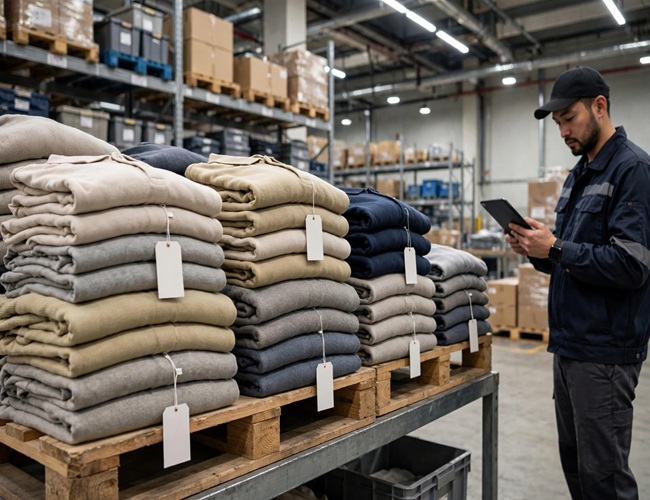
Traceability does not end at the factory gate. Every handover from fabric to finished carton feeds the passport’s record.
Conclusion
The Digital Product Passport changes what a garment label means: the care label becomes the front door of a verified data record, and factory paperwork becomes a competitive weapon.
The dates are still moving, and any article claiming otherwise is guessing. The direction is not Europe wants proof behind every garment, flowing from fibre to finished piece. Factories organising that proof now will meet the DPP as an opportunity; the ones that wait will meet it as an emergency. Start with one style, one spreadsheet, one pilot. The passport can wait. The preparation cannot.

Mohammad Noor Nabi, known by his author name Noor Ahmed Raaz, is a PhD Fellow at Bangladesh University of Textiles (BUTEX) and the Founder & Editor of Textile Merchandising. He is also an Assistant Professor of the Textile Engineering Department at a renowned university in Dhaka, Bangladesh. His research focuses on textile innovation and sustainability. Awarded the Research & Development Fellowship thrice from the Ministry of Science & Technology in Bangladesh, Noor Ahmed Raaz is dedicated to advancing textile engineering through education, research, and industry collaboration. For inquiries or collaborations, contact Noor Ahmed Raaz via email at textilemerchandising1@gmail.com or WhatsApp at +8801673758271.